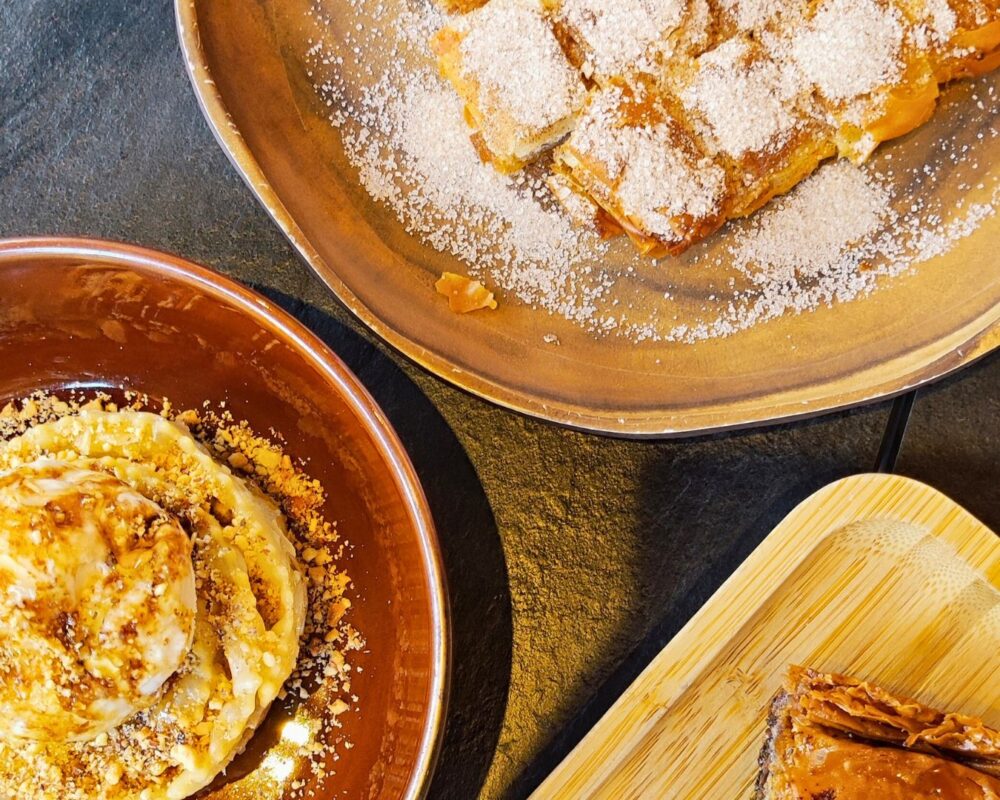
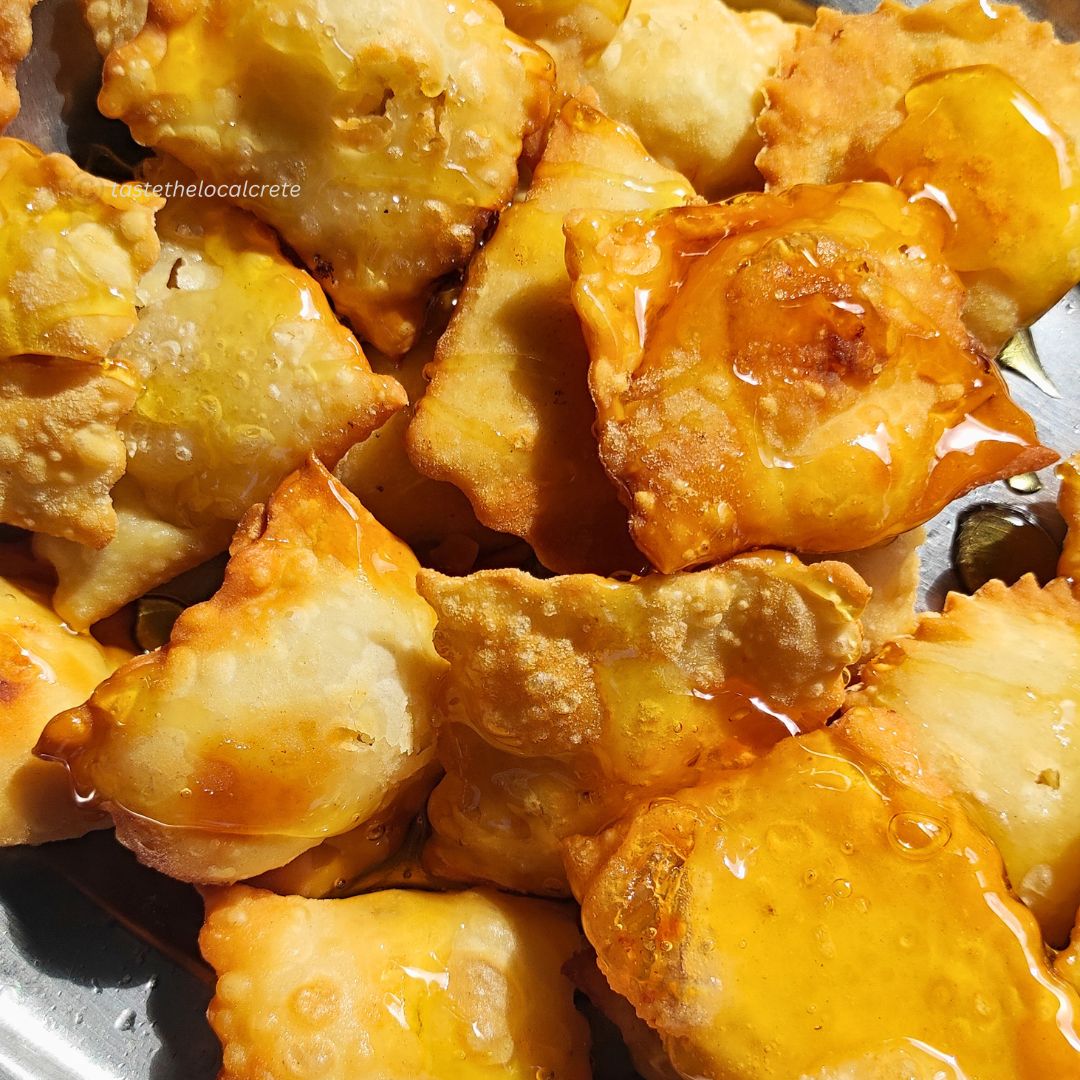
You’ve probably heard about Greek pies, those golden, flaky treats that make you forget about your diet for a moment. But here’s the thing: Cretan pies play by their own rules.
While the rest of Greece bakes their pies in ovens, Cretans grab a pan and get to work on the stovetop. This isn’t just about cooking methods. It’s about a completely different approach to pie-making.
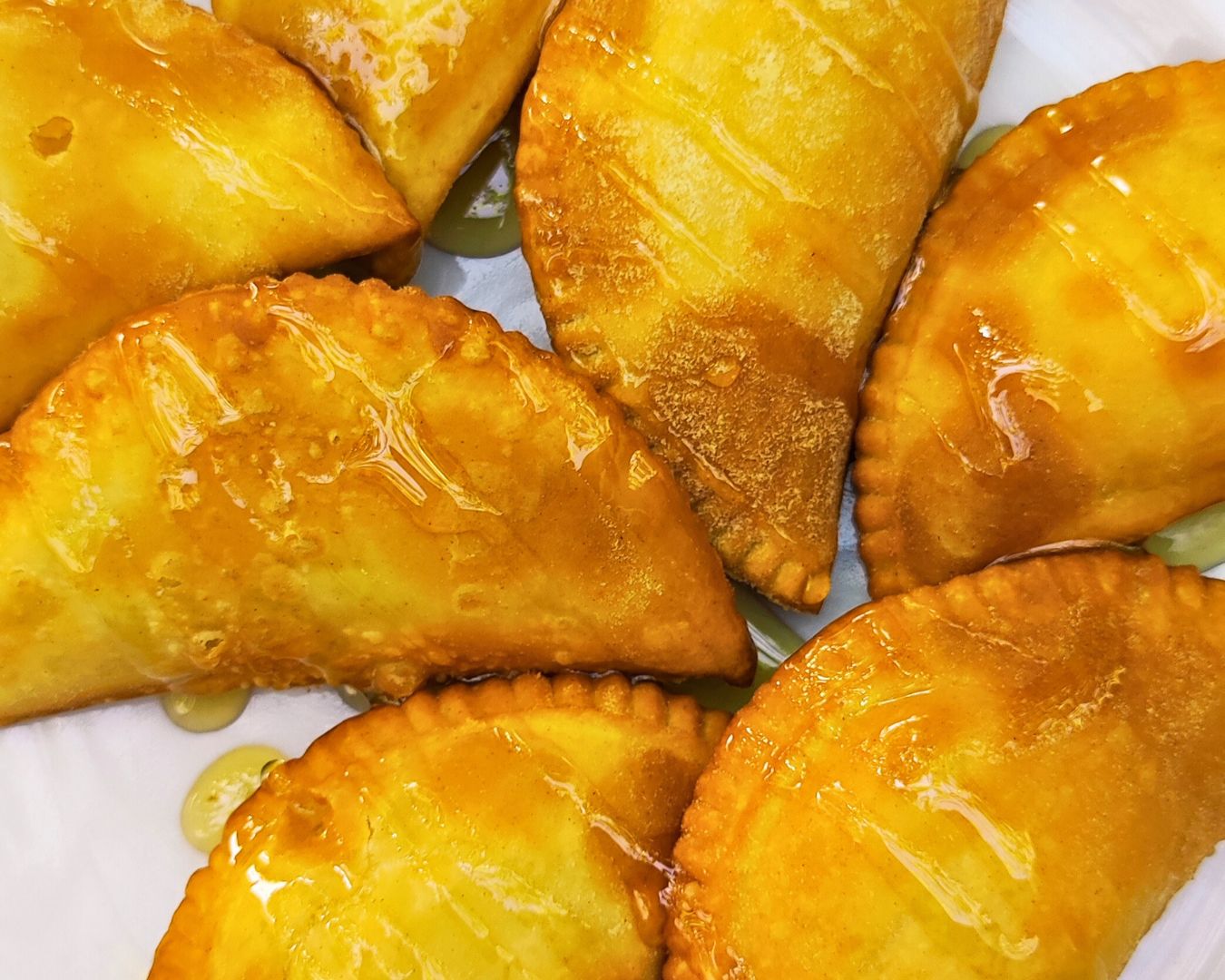
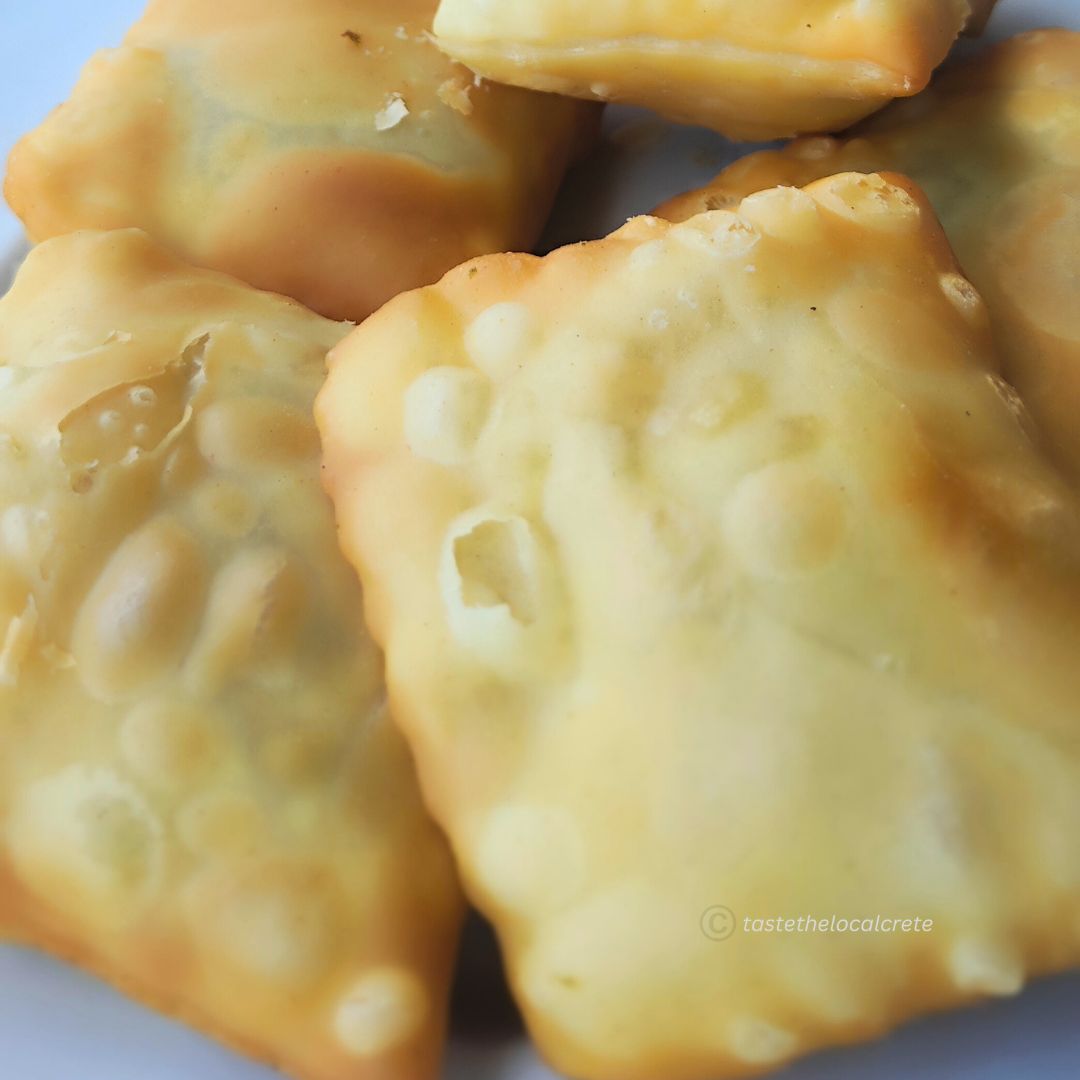
Greek pies come in countless varieties across the mainland and islands, but Cretan cheese pies stand out with their distinctive textures, unique fillings, and that crispy-yet-soft contrast you won’t find anywhere else. The most famous? Kalitsounia, those small, crescent-shaped pastries filled with local mizithra cheese and thyme honey.
Ready to learn what makes these island pies so special?
Download your free Cretan recipe guide from Taste the Local Crete. This digital cookbook works perfectly on your smartphone, tablet, or laptop, making it easy to bring real Cretan flavors to your kitchen.
Let’s get into it.
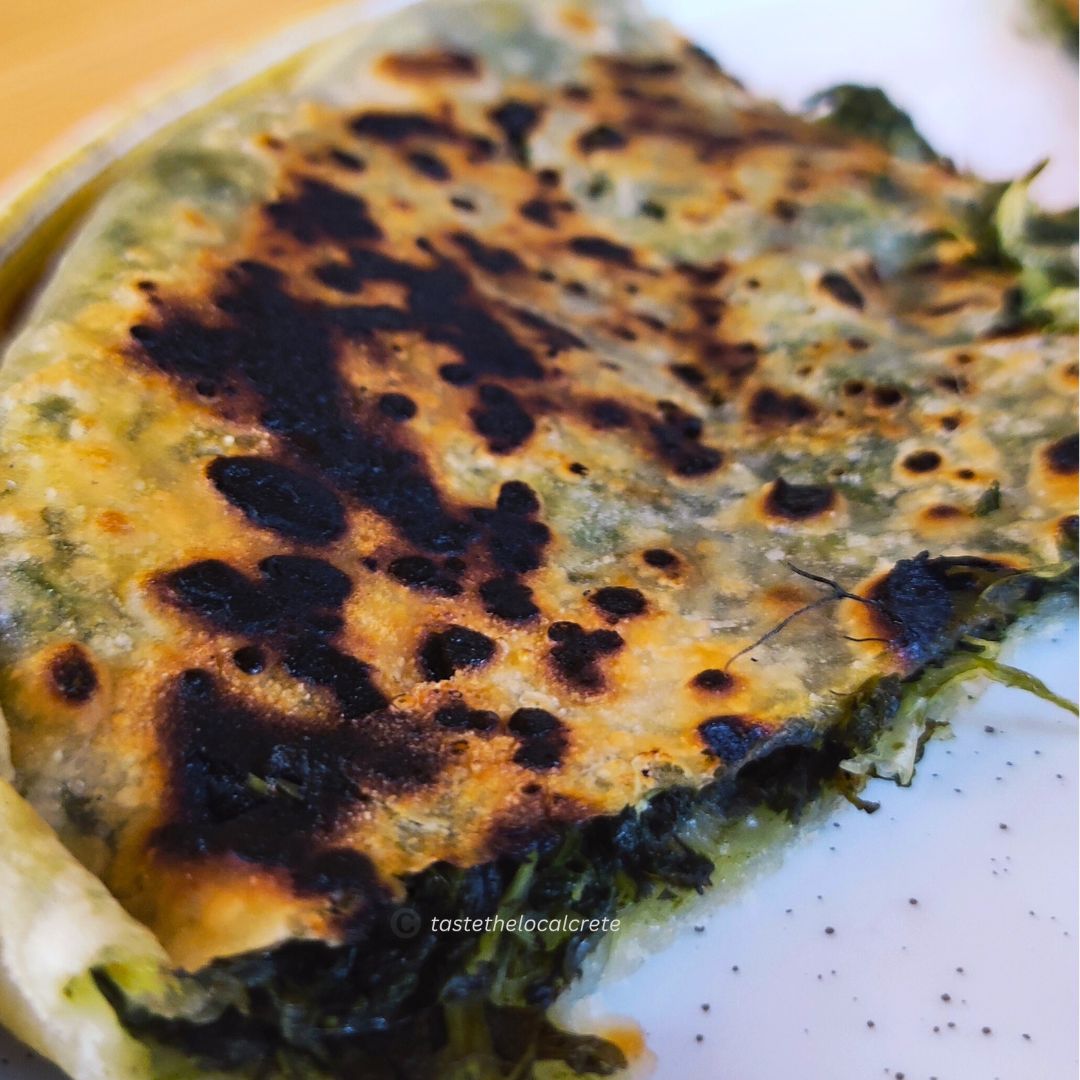
Pan-Cooked vs. Oven-Baked: The Big Difference
Here’s what sets pies in Crete apart from other Greek pies: the cooking method.
Most pies across the Greek mainland get their golden crust in an oven. Think spanakopita, tiropita, or any of those layered phyllo beauties you’ve seen at Greek bakeries. They’re baked until crispy and golden.
Cretan pies? They hit the pan instead.
This pan-cooking technique gives you something completely different. The outside gets crispy and slightly charred in spots, while the inside stays soft and packed with flavor. It’s a texture contrast that oven-baking just can’t replicate.
Why pan-cooking became the Cretan way has everything to do with practicality. Traditional Cretan homes didn’t always have access to ovens, especially in mountain villages. A pan over an open fire? That worked perfectly. Quick to heat, easy to manage, and ideal for feeding unexpected guests (which happens a lot in Crete, where hospitality is practically a religion).
This method also means faster cooking times. When you’re a shepherd coming down from the mountains or a farmer working the olive groves, you want something satisfying and fast. Pan-cooked pies deliver exactly that.
What Makes Cretan Cheese Pies Unique? It’s the Mizithra
If you want to understand Cretan cheese pies, you need to know about mizithra.
This fresh cheese plays the lead role in most traditional pies on the island. Made from sheep’s milk, goat’s milk, or a mix of both, mizithra has a soft, creamy texture and a mild, slightly sweet flavor that makes it incredibly versatile.
Unlike the salty punch of feta (which dominates mainland Greek pies), mizithra brings something gentler to the table. It works in both savory and sweet preparations, which is why you’ll find it in everything from breakfast kalitsounia to dessert pies drizzled with honey.
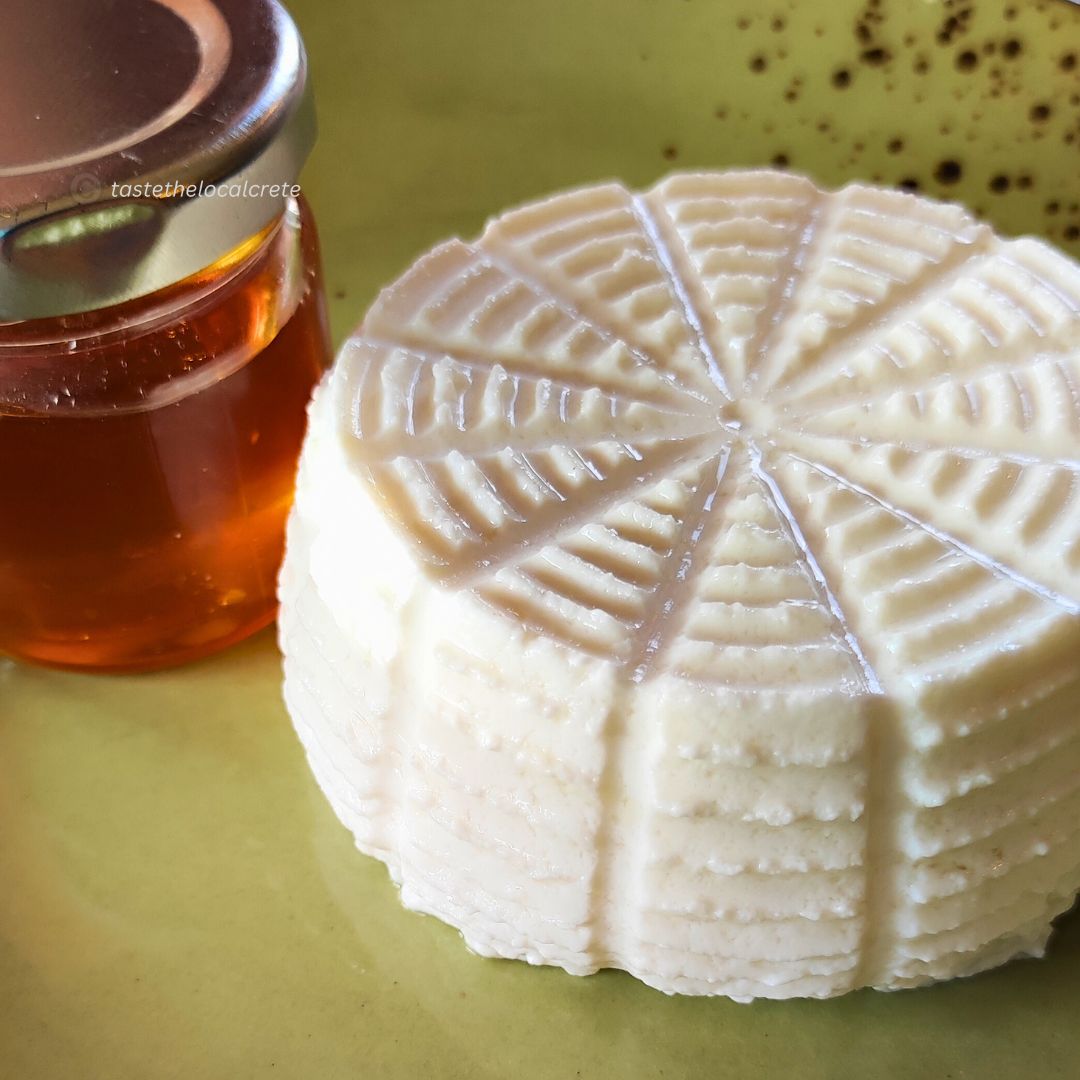
Fresh mizithra is a core ingredient in pie-making. When dried, it becomes anthotyros, a harder, saltier cheese with a completely different personality. But for pies? Fresh is the way to go.
The beauty of mizithra in Cretan cheese pies is its ability to blend with other ingredients without overpowering them. Mix it with wild herbs, and the herbs shine through. Add honey and cinnamon, and you get a sweet filling that’s not too rich. It’s the perfect supporting actor that lets everything else perform.
Here’s something most people don’t realize: you can’t replicate the exact flavor of Cretan mizithra anywhere else. The sheep and goats graze on wild herbs and plants that only grow on this island. That diet shows up in the milk, and therefore in the cheese. It’s terroir in cheese form.
Savory Pies You Need to Try
Cretan cuisine makes smart use of fresh, local ingredients, and the savory pies prove this perfectly. Each one tells a story about what grows on the island and how locals have learned to make the most of it.
Kalitsounia
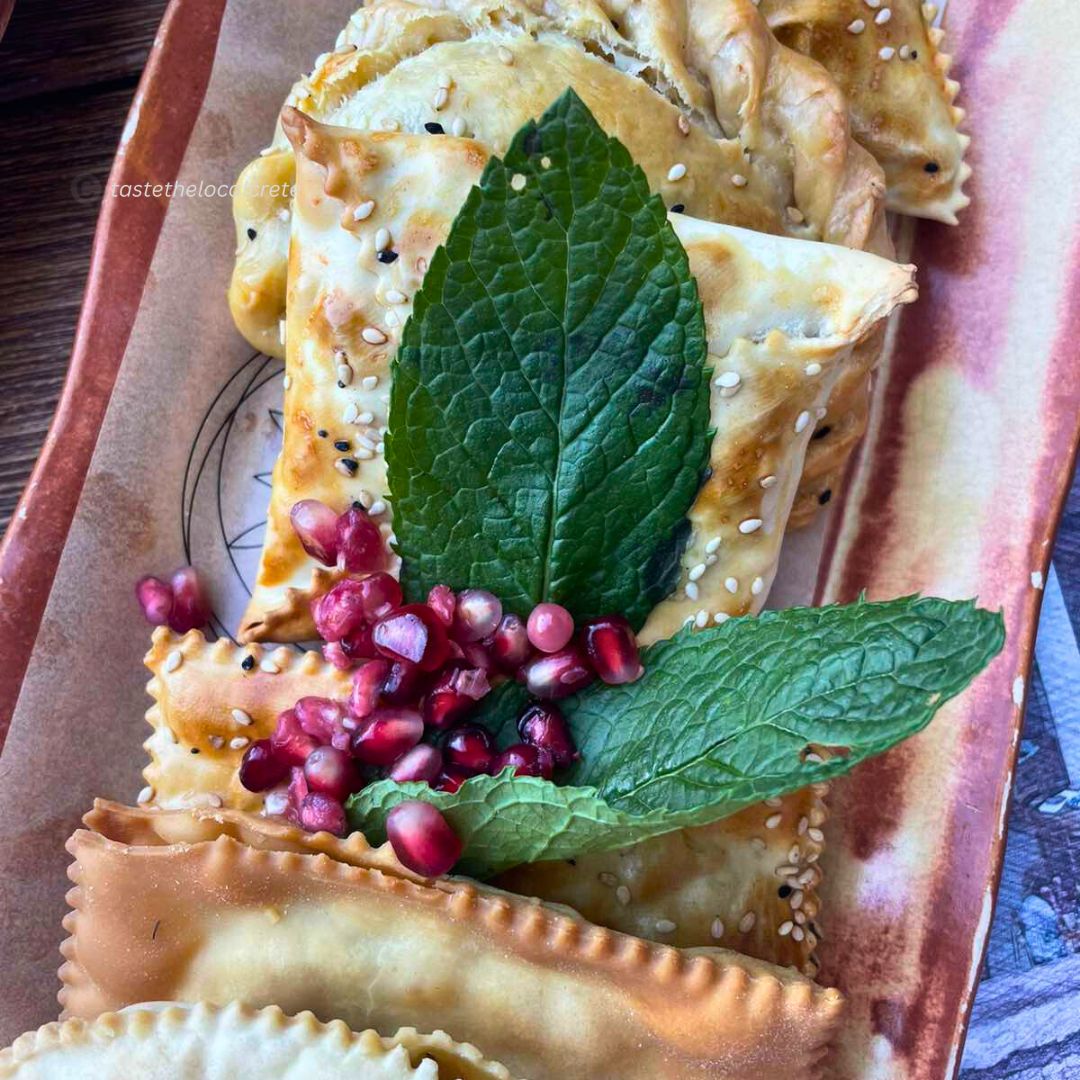
These small, crescent-shaped pies are probably the most famous pies in Crete that you’ll come across. Filled with a mixture of fresh herbs and soft local cheese, they’re pan-fried until golden and crispy on the outside while staying creamy inside.
Every family has their own kalitsounia recipe. Some add more herbs, others focus on the cheese. The dough can be thicker or paper-thin depending on who’s making them. That’s the beauty of traditional recipes passed down through generations.
Sfakiani Pie (Sfakianopita)
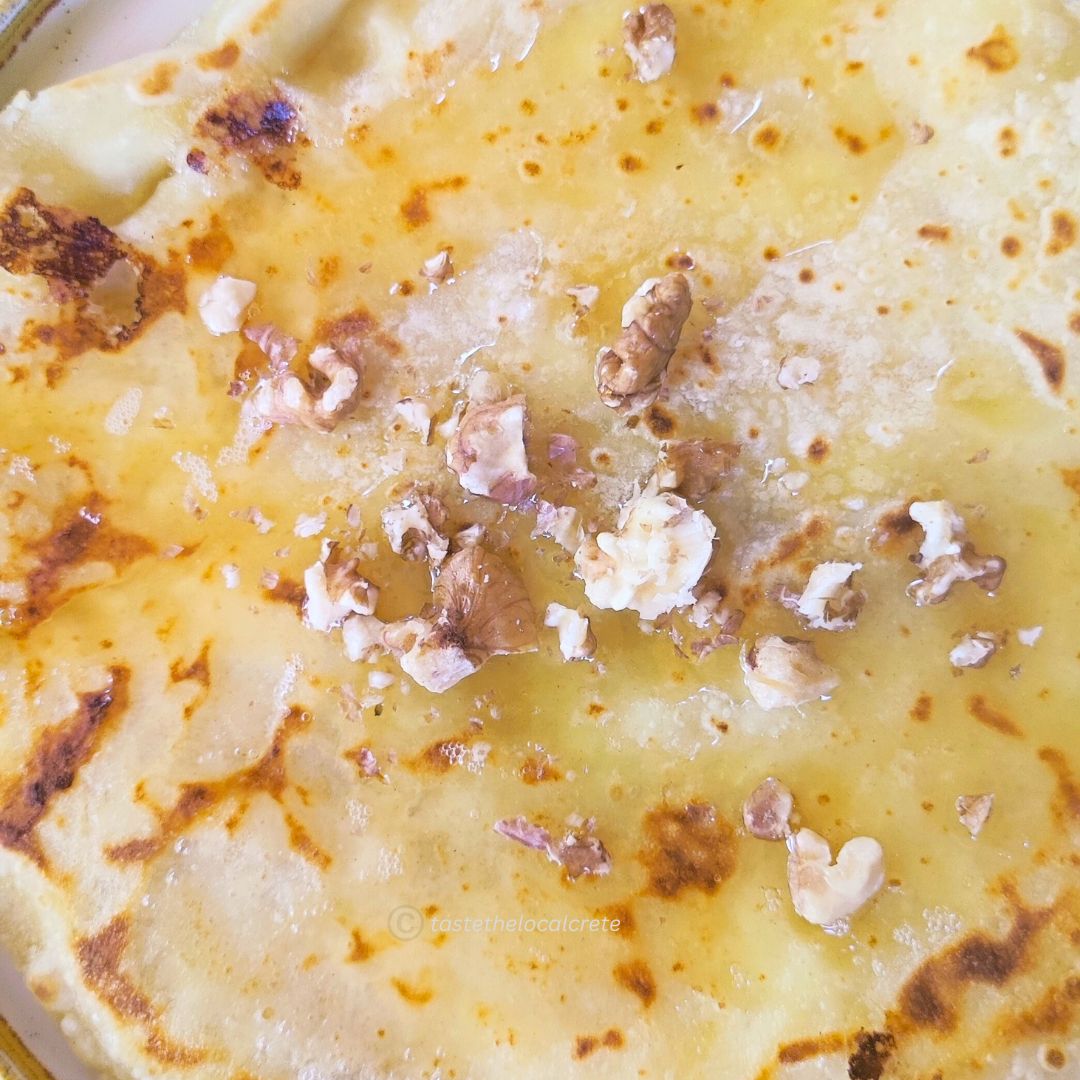
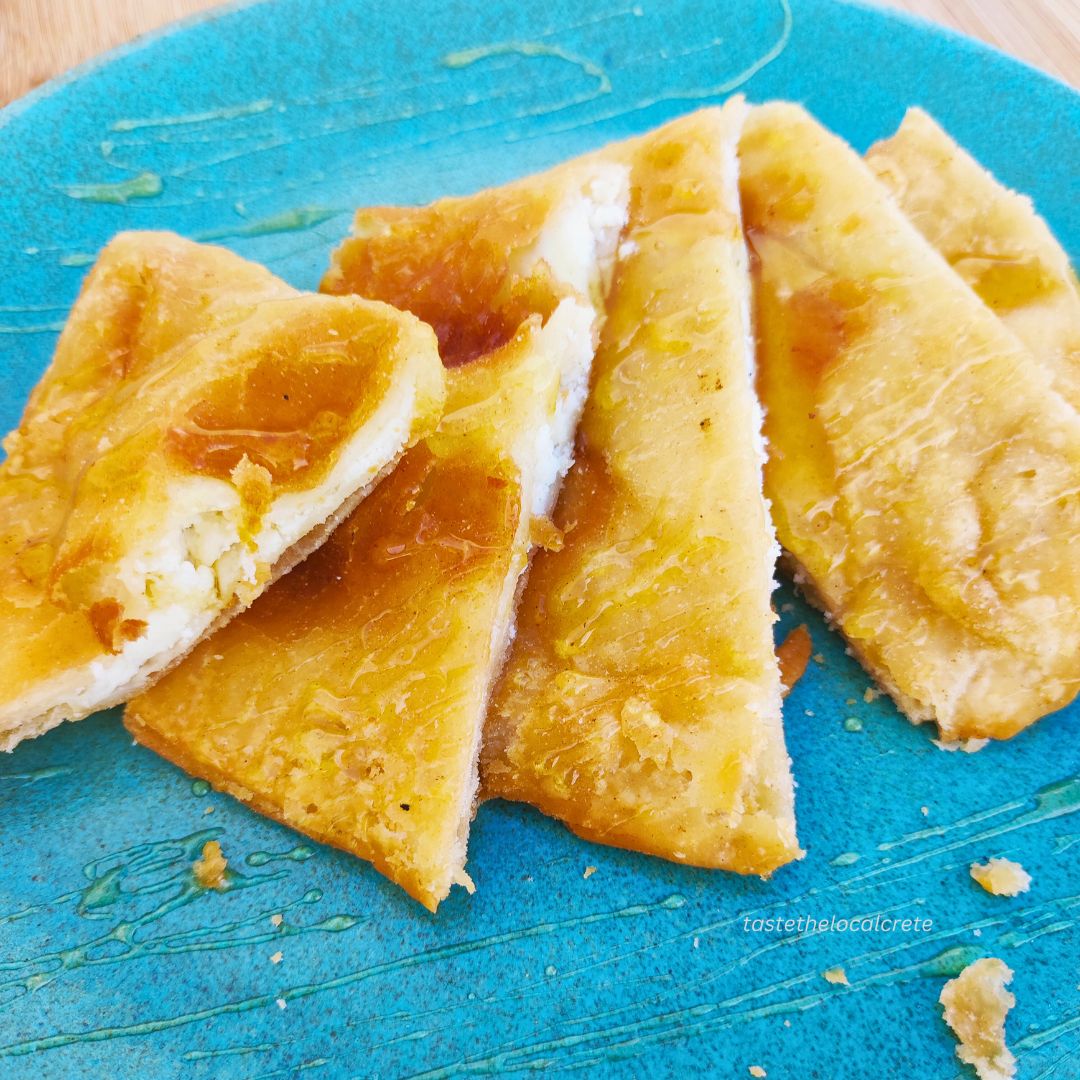
Named after the Sfakia region in southern Crete, this pie breaks all the rules. It’s filled with soft cheese, cooked in a pan, then drizzled with honey after it comes off the heat. Sweet and savory in one bite? That’s the Cretan way.
The sfakiani pie perfectly shows how Cretan food doesn’t stick to our modern categories of sweet versus savory. It sits right in the middle, and somehow it works.
Marathopita
Wild fennel grows all over Crete, and locals know exactly when to forage it. Marathopita combines this wild fennel with onions and generous amounts of olive oil. It’s a testament to the Cretan love for wild greens and the knowledge of when and where to find them.
Kreatotourta
This hearty meat pie gets filled with lamb or goat, mizithra, graviera cheese, and aromatic herbs. You’ll often see it at festive occasions and family gatherings. It’s rich, filling, and packed with protein from both the meat and cheese.
Haniotiko Boureki (Kolokythoboureko)
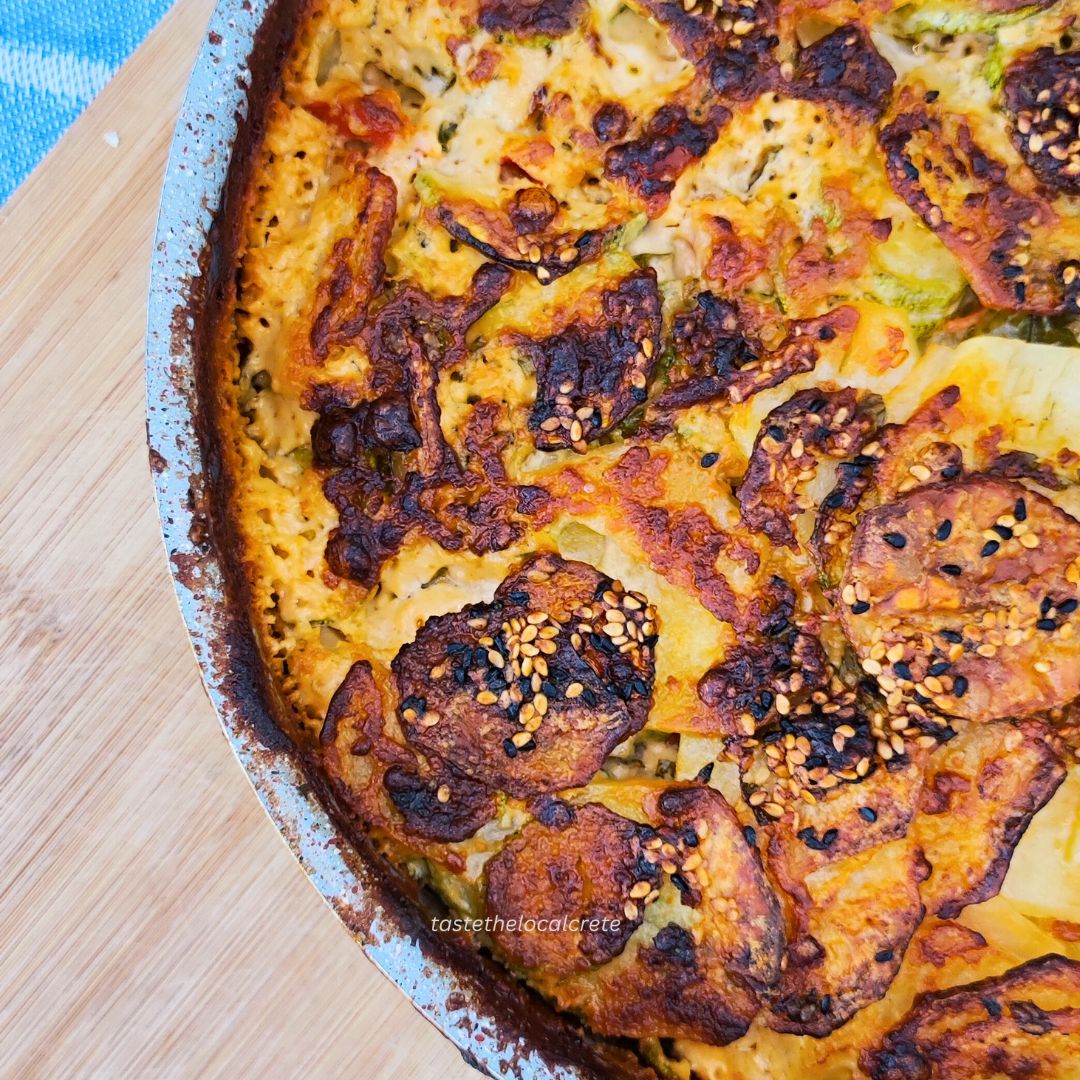
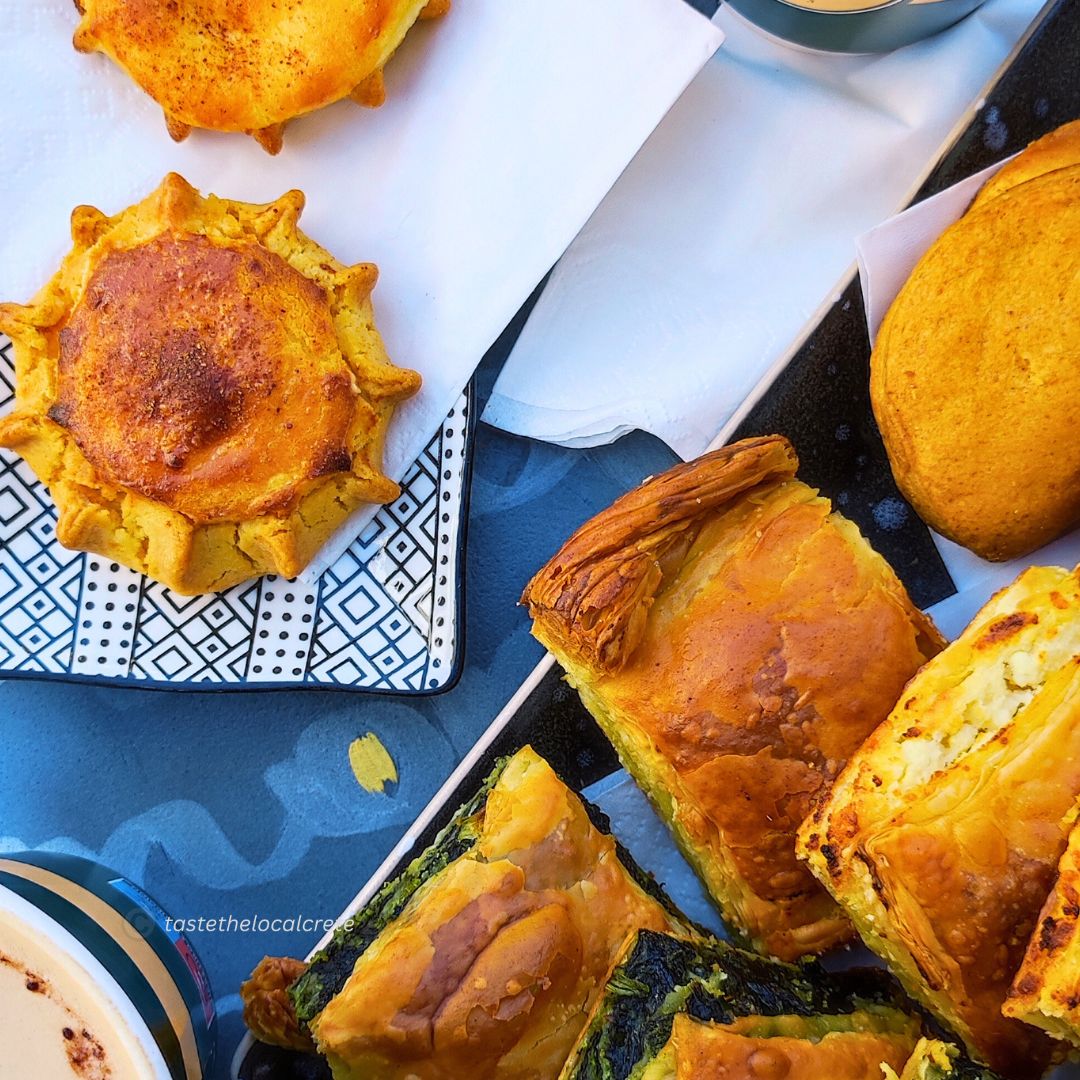
Coming from the Chania region in western Crete, this layered pie uses zucchini, potatoes, mizithra, and graviera cheese. It’s lighter than meat-based pies and perfect for summer months when zucchini is abundant. Some versions are oven-baked, making this one of the exceptions to the pan-cooking rule.
Sweet Cretan Pies That’ll Surprise You
The island doesn’t draw hard lines between sweet and savory. Many traditional pies blur that boundary in ways that might surprise you.
Kalitsounia (Sweet Version)
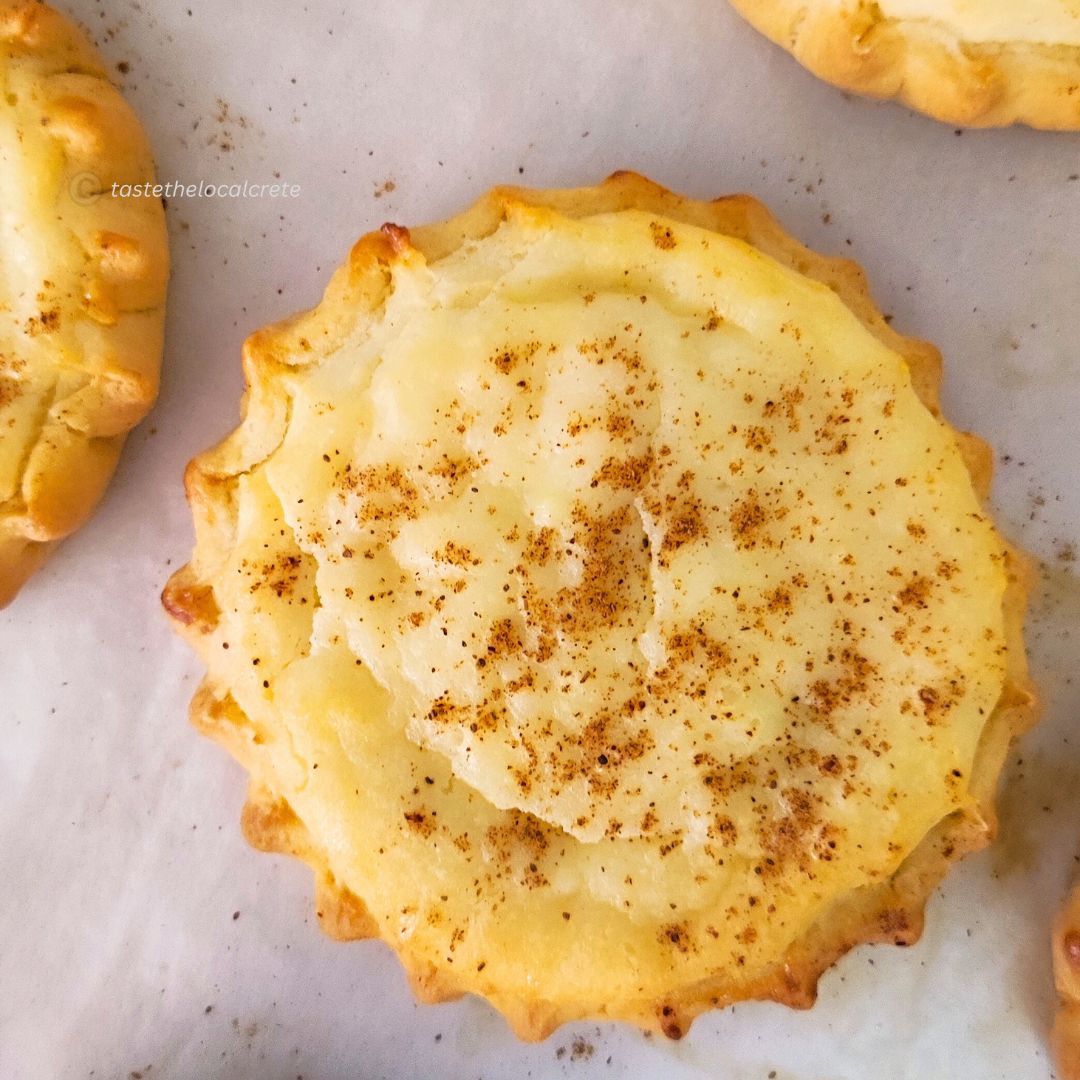
Yes, kalitsounia come in sweet versions too. These use the same mizithra cheese base but add honey and cinnamon to create a dessert that’s not overwhelmingly sweet. They’re often made during Easter celebrations and other religious holidays.
The dough for sweet kalitsounia sometimes includes sourdough starter, which adds a subtle tang that balances the honey. It’s more complex than it sounds.
Lyhnarakia
These small, sweet tartlets get their name from their shape, which resembles ancient oil lamps (lyhnos in Greek). Filled with fresh mizithra and flavored with cinnamon, they’re delicate and just sweet enough to end a meal without feeling heavy.
Nerati Mizithropita
This traditional cheese pie comes from Sitia in eastern Crete. It uses xinomizithra (a sour variety of mizithra) and gets drizzled with thyme honey after cooking. Locals eat it for breakfast or as a sweet snack, which tells you something about how Cretans view dessert.
The combination of sour cheese and sweet honey creates a flavor profile you won’t find in mainland Greek pies.
Mizithropitakia
These mini fried pies get filled with fresh mizithra and spearmint. In Crete, any small pie gets called “pitarakia,” and these particular ones show up at celebrations and family gatherings. They’re bite-sized, which makes them dangerous because you’ll eat more than you planned.
Tips for Making Pies at Home
Use Quality Olive Oil
Cretan cooking relies heavily on extra virgin olive oil, and pies are no exception. This isn’t the place to skimp. The oil affects both flavor and texture, creating that crispy exterior that makes pan-cooked pies special.
For the dough, use olive oil instead of butter. For cooking, pour a generous amount into your pan. Yes, it seems like a lot. That’s the Cretan way.
Don’t Overwork the Dough
The key to flaky, tender crusts is gentle handling. Mix your dough until it just comes together, then stop. Overworking develops too much gluten, which makes the crust tough instead of delicate.
Let the dough rest for at least 30 minutes before rolling. This relaxes the gluten and makes everything easier to work with.
Control Your Heat
Pan-cooking requires medium heat. Too hot, and you’ll burn the outside while leaving the inside raw. Too low, and your pies will be greasy instead of crispy.
The pan should be hot enough that the dough sizzles gently when it hits the oil, but not so hot that it smokes or spatters aggressively.
Add Tsikoudia to Your Dough
Here’s a trick from Cretan grandmothers: add one shot of tsikoudia (the local spirit) to your pie dough. It helps create a crispier texture. Don’t have tsikoudia? Use cognac, red wine vinegar, or rum instead.
The alcohol evaporates during cooking, leaving behind only texture improvement.
Get Creative with Fillings
Traditional recipes are delicious, but don’t be afraid to experiment with what’s in season and local to your area. The Cretan approach to cooking is all about using what’s available and fresh wild greens, seasonal vegetables, and local cheeses, all fair game.
What to Use When You Can’t Find Mizithra
Let’s be honest: finding authentic Cretan mizithra outside of Greece can be tough. But you can still make great cheese pies with substitutes that come pretty close.
Ricotta Cheese
This is your best bet. Ricotta has a similar texture and mild flavor that works in both sweet and savory pies. It’s widely available and affordable. The texture is slightly wetter than mizithra, so you might want to drain it for 30 minutes before using.
For sweet pies, ricotta works almost perfectly. For savory ones, it gets the job done without changing the character of the dish too much.
Feta Cheese
For savory pies, crumbled feta can work, though it’s saltier and more assertive than mizithra. If you go this route, reduce any additional salt in your recipe.
Feta has a completely different personality than mizithra, so your pie will taste different. Not bad, just different.
Ricotta and Feta Mix
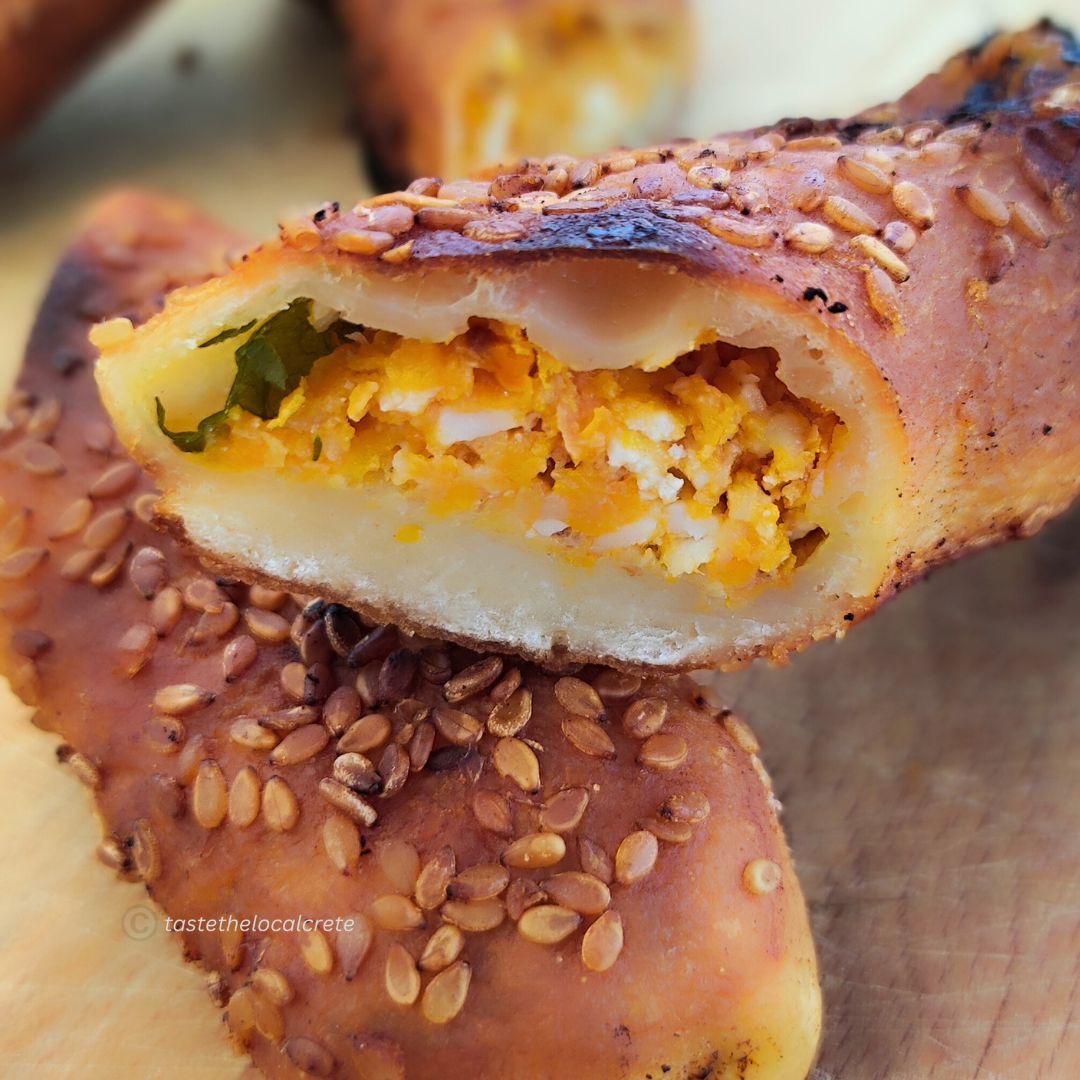
Here’s a smart compromise: mix ricotta and feta. The ricotta provides the creamy texture, while the feta adds that tangy, salty character Greek cheeses are known for. Use about two parts ricotta to one part feta.
This combination mimics both the texture of mizithra and gives you a flavor closer to what you’d get in Crete.
The Reality Check
Substitutes work fine for home cooking, but they won’t give you the same result. Real Cretan mizithra has flavors that come from animals grazing on plants that only grow on the island. That’s impossible to replicate elsewhere.
If you ever get the chance to source authentic Cretan mizithra, grab it. The difference is noticeable.
Ready to bring these flavors to your kitchen?
The digital Cretan cookbook from Taste the Local Crete gives you over 50 authentic recipes from the daily Cretan cuisine, including traditional pie recipes that locals have been making for generations.
This digital recipe guide works on your smartphone, tablet, or laptop, making it easy to cook authentic Cretan dishes wherever you are. Cretan cooking relies on simple ingredients, minimal preparation, and distinct flavors that let quality ingredients shine.
Download your free Cretan recipe guide now and start cooking the Cretan way.
Happy cooking!
Frequently Asked Questions
Are all Cretan pies cooked in a pan?
Most pies in Crete are pan-cooked, but there are exceptions. Some versions of Haniotiko Boureki (the zucchini and potato pie from Chania) are traditionally baked in an oven.
The pan-cooking method is what defines most pies in Crete and sets them apart from other Greek pies, but Cretan cooks aren’t rigid about it. If you have leftovers, you can store them in the refrigerator for 1 to 2 days and reheat them in either a pan or oven.
What’s the difference between kalitsounia and other Greek cheese pies?
Kalitsounia are smaller, crescent-shaped, and pan-cooked, while most mainland Greek cheese pies like tiropita are larger, rectangular or triangular, and oven-baked with phyllo dough.
Kalitsounia uses fresh Cretan cheeses (usually mizithra) mixed with local herbs, giving them a milder, creamier flavor compared to the sharper feta-based fillings common in other Greek pies. They also come in both sweet and savory versions, which is less common with mainland pies.
Are pies in Crete vegetarian?
Absolutely. Many pies in Crete are naturally vegetarian, filled with cheese, seasonal vegetables, or wild greens. Traditional Cretan cuisine has strong vegetarian roots because meat was historically expensive and saved for special occasions.
Pies like kalitsounia, marathopita (wild fennel pie), and Haniotiko boureki (zucchini and potato pie) are all vegetarian. Even the Cretan approach to cooking celebrates simple, plant-based ingredients, making it easy to find or adapt pie recipes for a vegetarian diet.
FREE LOCAL'S GUIDE TO CRETE
Get my free 25-page Cretan guide with insider tips and answers to your most common questions. Written by someone who actually lives here.