You’ve seen the Greek salad. You’ve had the moussaka. But if you want to know what Cretans actually put on the table at home, that’s a different list entirely.
Cretan foods have their own identity, separate from the rest of Greek cuisine. This isn’t just a marketing claim. The island sits on over 1,600 plant species, 170 of which grow nowhere else on earth. Its cheese varieties carry PDO protection. Its pasta is handmade. And its wild greens end up in omelettes, pies, and salads that you won’t find on any tourist menu.
This post covers six of those dishes. The ones locals cook on a Tuesday. The ones you’ll spot on a kitchen counter in Sitia or a village taverna in the mountains of eastern Crete. If you’re planning a trip or just want to cook the real thing at home, this is where to start.
Want to try these recipes yourself? Grab the free Cretan recipe guide from Taste the Local Crete.
It’s a sneak peek into the digital Cretan cookbook, which you can use on your smartphone, tablet, or laptop. A good starting point before we get into the food.
WHY CRETAN FOOD IS DIFFERENT FROM THE REST OF GREECE
Ask a Cretan if their food is the same as mainland Greek food, and you’ll get a look.
It’s not.
Cretan foods developed in relative isolation over centuries, shaped by what the island produced rather than what was imported or influenced from elsewhere. The result is a cuisine that is hyper-local, seasonal, and built around ingredients that simply don’t exist anywhere else.
Here’s what sets it apart:
The animals graze differently. Sheep and goats in Crete feed on over 1,600 wild plant species, including 170 that are endemic to the island. That diet shows up directly in the milk, the cheese, and the meat. You can’t replicate those flavors elsewhere because the plants don’t grow elsewhere.
The olive oil is serious business. Crete produces around 30% of Greece’s olive oil, and Cretans consume roughly 25 liters per person annually, more than almost anywhere else in the world. Extra virgin olive oil isn’t a condiment here. It’s a foundation.
The cheese list is long. Crete has 14 PDO-protected cheese varieties, more than any other Greek region. Some, like Xygalo Sitias, are produced only in one specific area of eastern Crete.

The wild greens are everywhere. Horta, stamnagathi, and dozens of other foraged greens appear in pies, omelettes, and salads throughout the year. Cretans have been eating them for generations, long before anyone called it a “superfood.”
Crete was also officially named European Region of Gastronomy 2026, which is recognition that was a long time coming.
The jury didn’t just taste good Cretan food. They met with 60+ local organizations and examined how the island actually works.
What impressed them:
- Circular economy
- Sustainable food systems that support local farmers
- A commitment to long-term food culture (not just tourism trends)
- Self-sufficient agricultural production
Crete doesn’t import its identity. It grows it.
6 AUTHENTIC CRETAN FOODS WORTH KNOWING
These aren’t dishes invented for tourists. They’re what shows up on a Cretan table on an ordinary day. Some you can find in tavernas if you know where to look. Most you’ll only really experience if you go beyond the resort areas and into local villages, markets, and family kitchens.
Skioufichta
Crete makes its own pasta. That’s the short version.
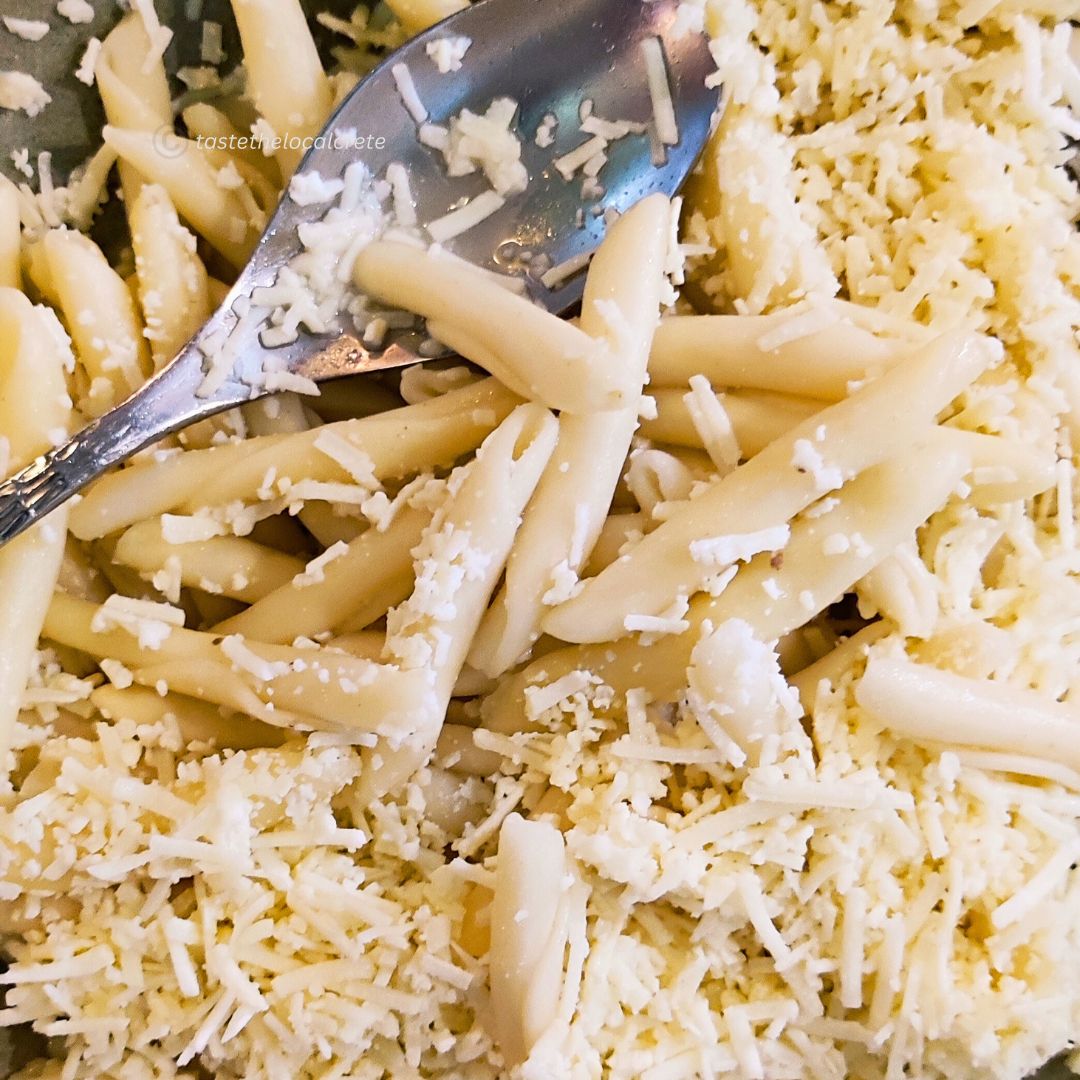
Skioufichta is a hand-rolled pasta made from wheat flour, water, salt, and olive oil. The name comes from the Cretan verb “skioufizo,” which means “to turn.” Each piece is rolled by hand and pressed with the fingers to create a small cavity, giving it a chewy, irregular texture that no machine replicates.
And just to be clear: this is not a phyllo-dough pasta. Skioufichta uses a dough-rolling method that’s entirely its own, which is exactly what sets it apart from other pasta varieties you’ll find across Greece.
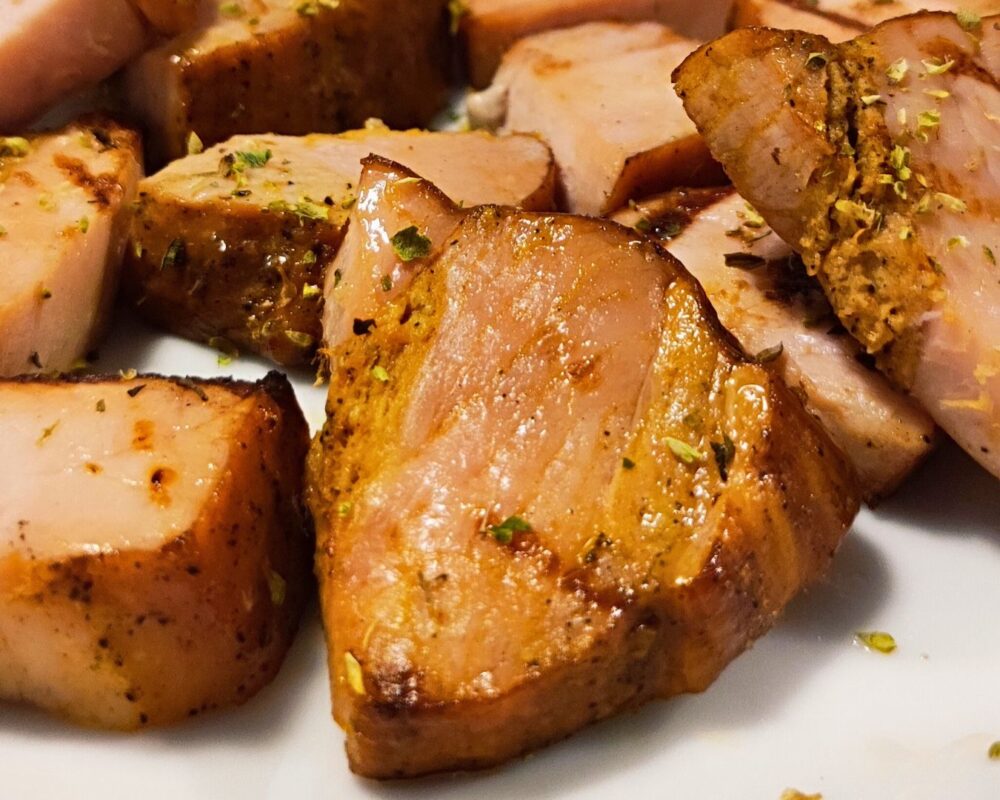
It’s typically served with grated hard cheese like anthotyros or mizithra, cooked in meat broth, or tossed with local ingredients like apaki, Crete’s traditional smoked pork. The flavor is mild and wheaty, which means it holds whatever you put on it without competing.
You’ll find it in food shops across Crete and in rustic tavernas that still cook the old way. It’s also one of the recipes in the free Cretan recipe guide, if you want to try it at home.
Nerati
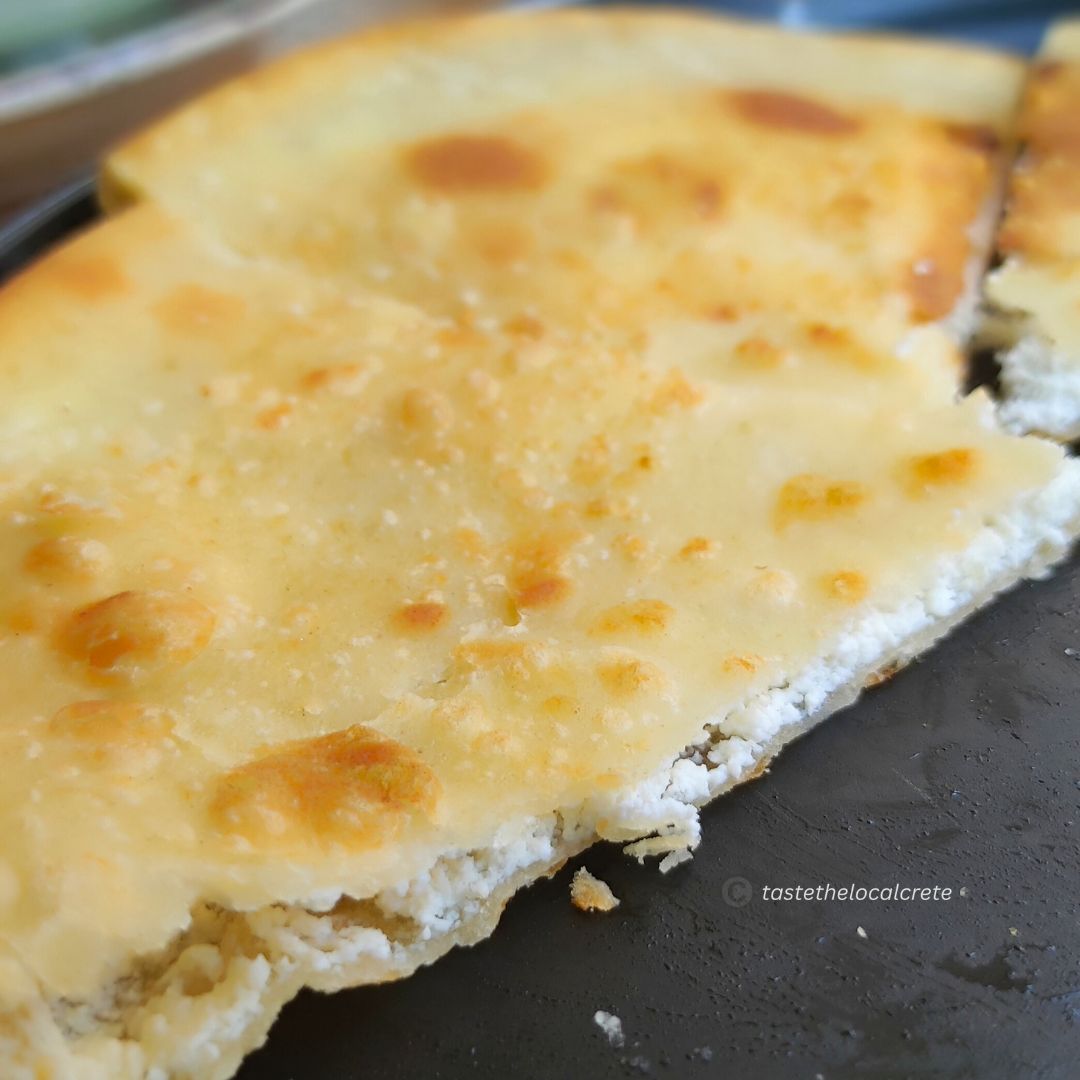
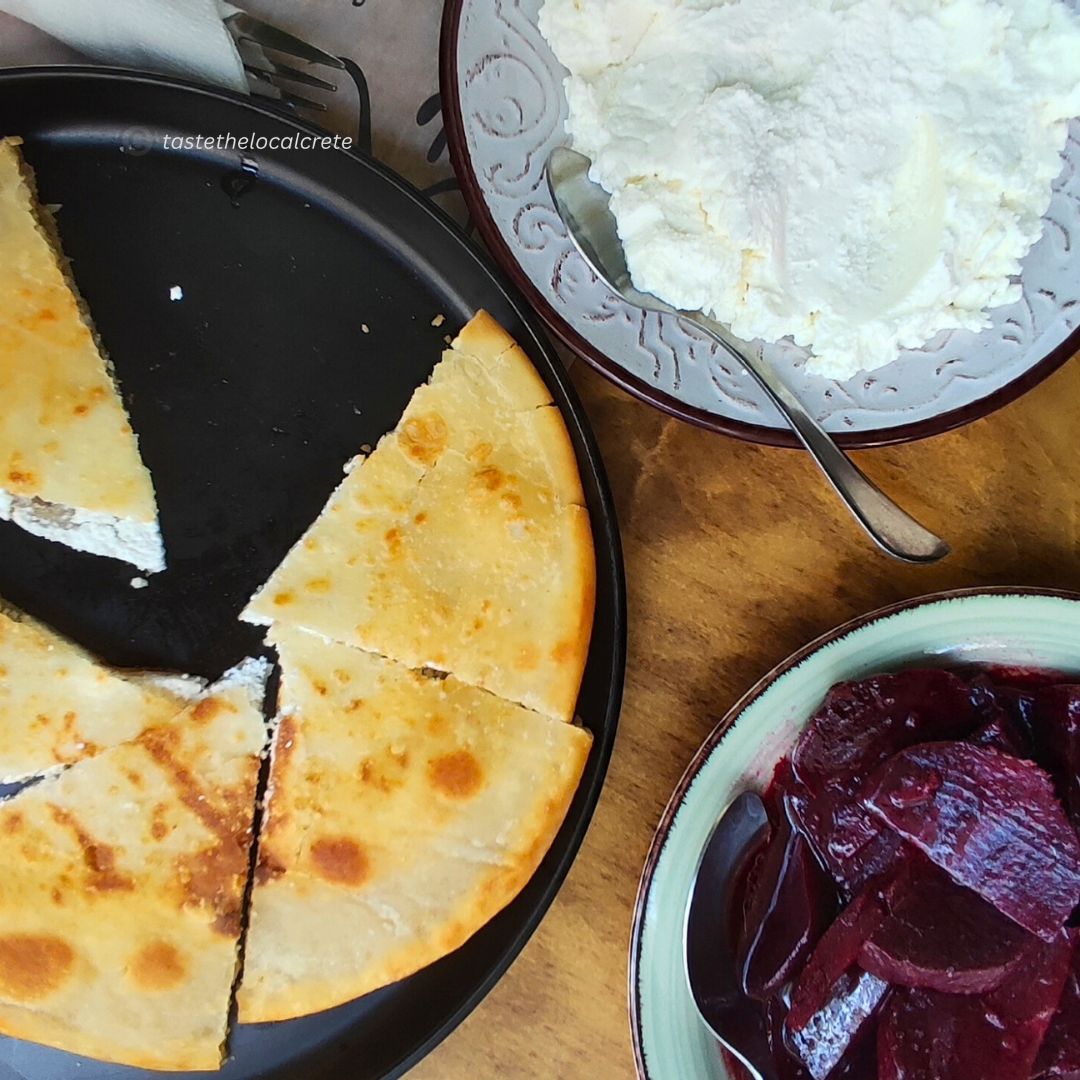
Nerati is eastern Crete’s cheese pie, and it deserves more attention than it gets.
Unlike sfakianopita from western Crete, which is made with thin phyllo-style dough, nerati has its own distinct pastry and filling. The cheese inside is xinomizithra, a PDO-protected soft, creamy cheese with a pleasantly sour flavor that you won’t find in a standard Greek pie. That tangy creaminess against the flaky pastry is what makes nerati worth tracking down specifically.
It’s a Sitia regional specialty, so you’re unlikely to find it in the more touristy parts of the island. That’s actually a good reason to head east.
Graviera with Honey
This combination raises eyebrows until people try it, and then they stop raising eyebrows.
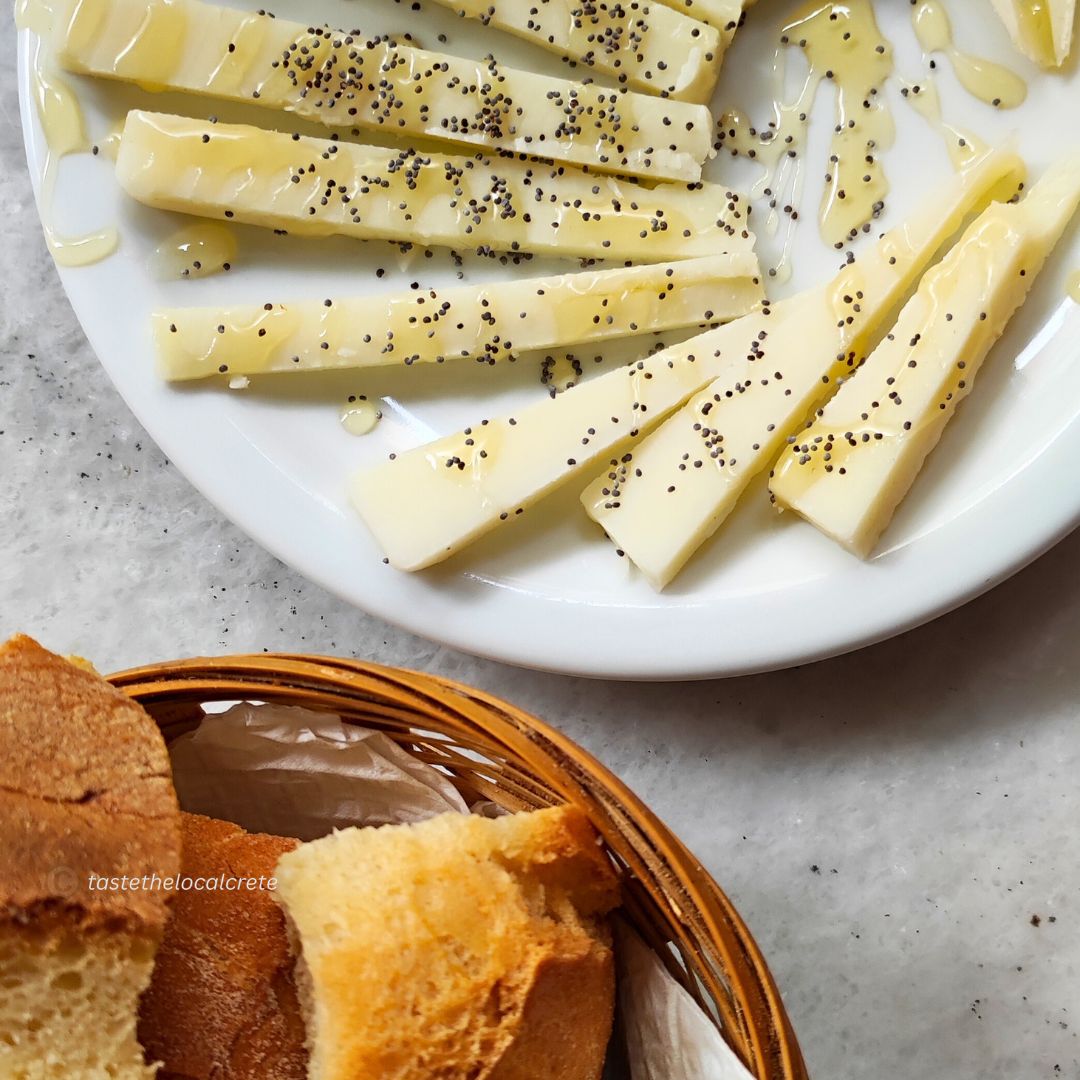
Graviera Kritis is Crete’s flagship hard cheese, aged for a minimum of three months, with a rich, slightly sweet flavor that deepens as it matures. Here, it helps to remember what goes into making it. Sheep and goats in Crete graze on over 1,600 wild plant species, including 170 that are endemic to the island.
That diet shows up directly in the milk and, by extension, in every wheel of graviera produced here. You cannot replicate that flavor elsewhere because the plants don’t grow elsewhere.
Pair that cheese with local thyme honey, and something clicks into place. The saltiness against the floral sweetness is one of those combinations that feels obvious in hindsight.
It works as a snack, a breakfast component, or a simple dessert. No recipe needed. Just good cheese and good honey, both of which Crete has in abundance.

Xygalo Sitias
This one is genuinely rare, and not in a marketing sense.
Xygalo Sitias is a PDO-protected creamy, spreadable cheese produced only in the Sitia area of eastern Crete. The PDO status means it cannot legally be made anywhere else. Small-scale local workshops produce it in limited quantities, which is why you won’t find it outside the island in any reliable way.
The flavor is tangy and slightly sour, with a soft, spreadable texture. It works on dakos, with fried potatoes, in salads, or simply on bread. It also pairs excellently with a fluffy Cretan omelette, the kind made with fried potatoes and eggs, where the creaminess of the xygalo cuts through beautifully.
It’s also a classic meze-style dish served alongside tsikoudia, the Cretan spirit drink. If someone pours you a glass of tsikoudia and puts xygalo on the table, you’re having a proper Cretan moment.
If you’re visiting eastern Crete, finding Xygalo Sitias in a local supermarket or directly from a cheese workshop is one of those small food experiences that stays with you.
Cretan Omelette with Wild Greens
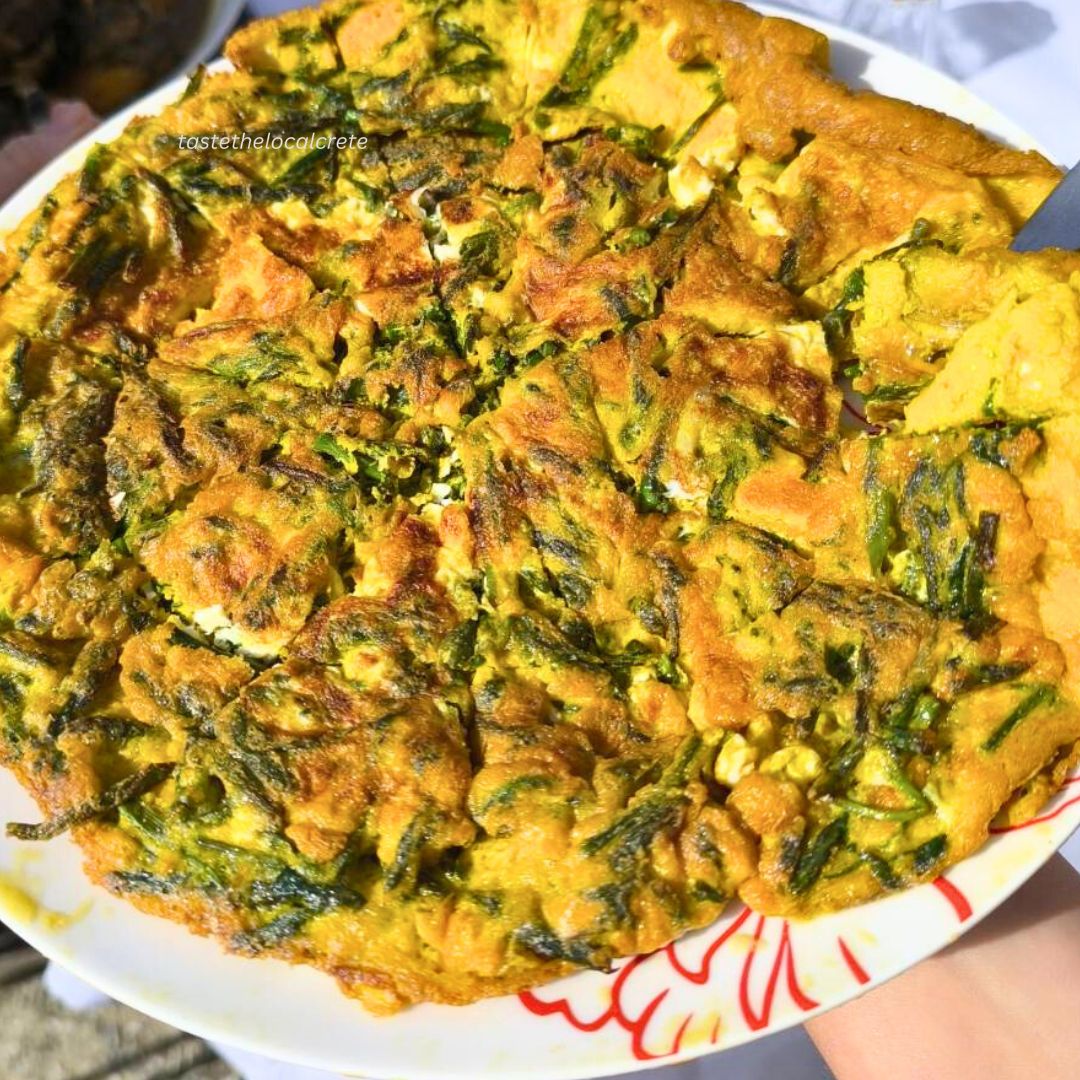
The Cretan omelette is not complicated. Eggs, wild greens, olive oil. That’s the base.
What makes it interesting is the greens. Horta, stamnagathi, and other foraged or seasonal plants go into the pan, and the result is an omelette with a depth of flavor that a plain egg dish doesn’t have.
Stamnagathi is a wild green native to Crete with a slightly bitter taste and a long history of both culinary and medicinal use. You won’t find it in a supermarket outside the island.
This is everyday Cretan cooking at its most honest. Quick, seasonal, built from what’s available. A single serving of these wild greens can carry antioxidant properties that far exceed what most people eat in a full day.
Sarikopites
Fried cheese spirals. The pitch really does write itself.
Sarikopites are made from thin pastry rolled around soft local cheese, shaped into spirals, and fried in olive oil. The name comes from “sariki,” the traditional Cretan headscarf worn by men, because the spiral shape resembles the way the cloth is wound.
They’re particularly linked to the Rethymno area, where local cooks often fill them with tyrozouli cheese, a hard, aged variety that gives them a sharper, more intense flavor.
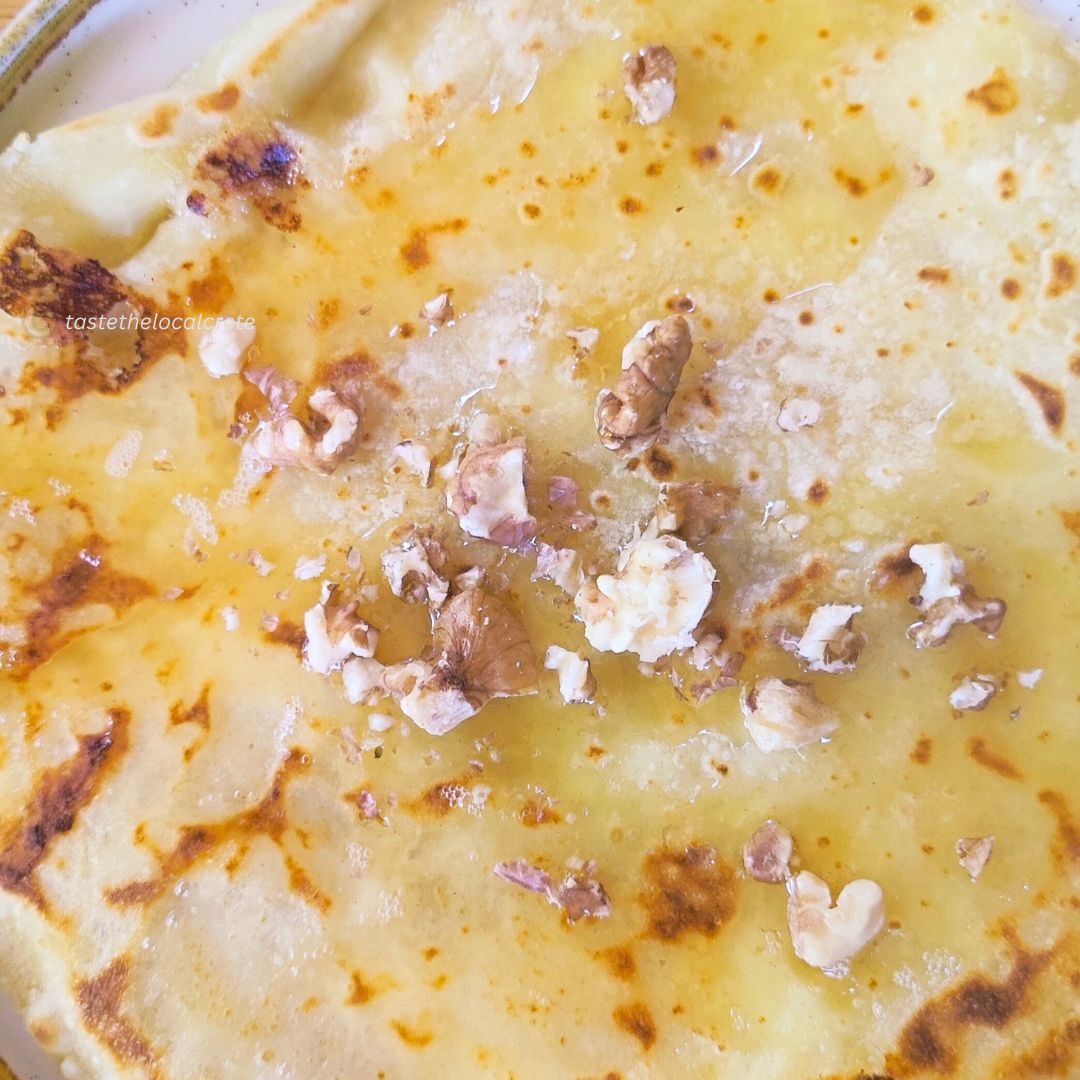
They’re crispy on the outside, soft and salty inside, and completely impractical to eat with any dignity. That’s fine. You’ll find them served hot as a snack or meze in local restaurants, but also as a dessert, drizzled with Cretan honey. That sweet finish turns them into something else entirely, and it works.
Like most great Cretan foods, the recipe is simple. The quality comes from the cheese, which comes from the animals, which comes from the land. That chain is what makes Cretan cooking hard to fake outside the island.
WHERE TO FIND THESE CRETAN FOODS AND HOW TO COOK THEM AT HOME
If you want to eat the way locals eat, you need to move away from the waterfront restaurants and toward the village tavernas, local markets, and small food producers in the mountains.
In eastern Crete, especially, the Sitia region is where several of these foods originate. A drive through the mountain villages will take you past small cheese workshops, family-run tavernas, and local supermarkets stocking PDO products like Xygalo Sitias and Xinomizithra that you simply won’t find packaged up in an airport shop.
A few practical pointers:
Local supermarkets in Cretan towns and villages stock quality Cretan cheese varieties from small regional workshops.
Village tavernas away from the coast are your best bet for dishes like skioufichta, nerati, and sarikopites.
If you want to go deeper into the less-traveled side of the island, the digital self-guided itineraries from Taste the Local Crete are built exactly for this.
And if you want to cook these dishes at home, before or after your trip, the digital Cretan cookbook by Taste the Local Crete is the place to start. It contains 50+ authentic recipes from the daily cuisine of Crete, the kind of food covered in this post. You can use it on your smartphone, tablet, or laptop, wherever you happen to be cooking.
Start with the free Cretan recipe guide.
FREQUENTLY ASKED QUESTIONS
What are traditional Cretan recipes for home cooking?
Traditional Cretan recipes are built around a short list of quality local ingredients: extra virgin olive oil, wild greens, local cheese, legumes, seasonal vegetables, and small amounts of meat or fish. The cooking methods are simple by design.
Good starting points for home cooking include:
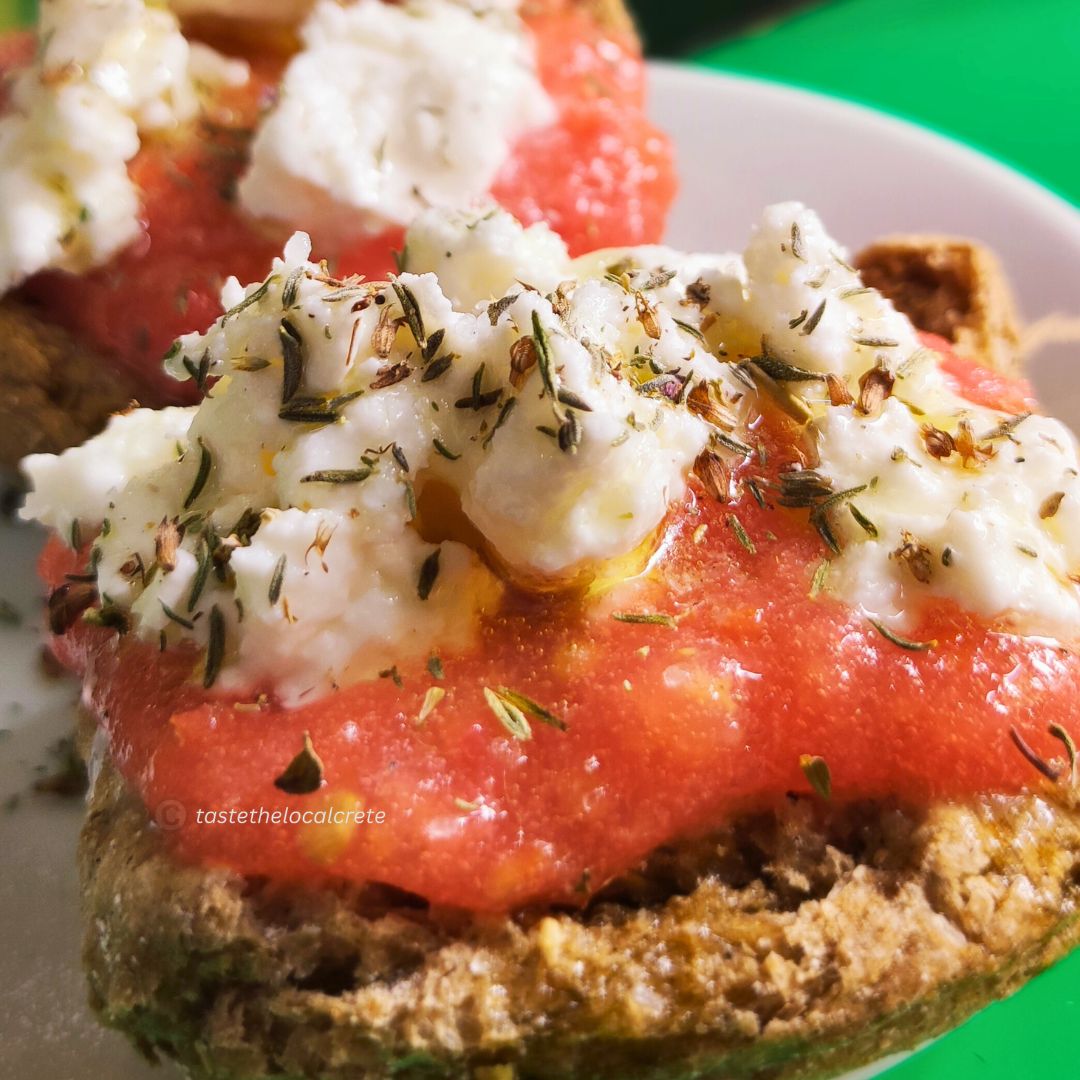
Dakos: barley rusk topped with grated tomato, crumbled mizithra or feta, olives, and a generous pour of olive oil. No cooking required.
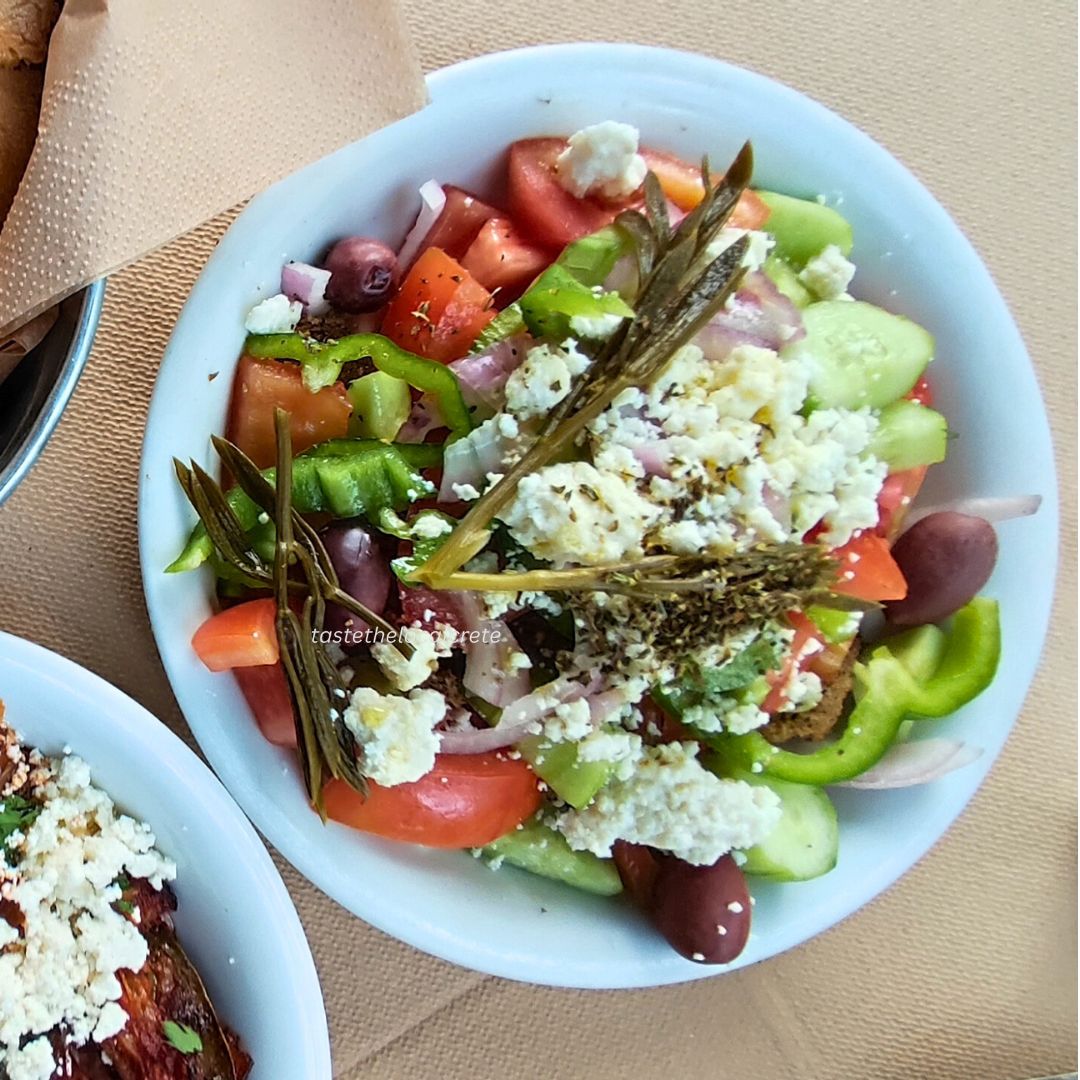
Cretan salad: not the same as a standard Greek salad. It contains Cretan rusk, kritamos (a wild herb native to the island), and local cheese varieties like xinomizithra, galomizithra, or xygalo instead of a standard block of feta.
The Rethymno salad: a regional variation with the same Cretan salad base, plus boiled eggs and potatoes. Heartier, and worth knowing about if you’re cooking for a crowd.
Oftes: Cretan baked potatoes, cooked simply with olive oil and herbs. One of those dishes that sounds unremarkable until you taste what good olive oil and Cretan herbs actually do to a potato.
Skioufichta with cheese: hand-rolled Cretan pasta served with grated anthotyros or mizithra. The pasta itself takes practice, but the result is worth it.
The free Cretan recipe guide from Taste the Local Crete covers several of these dishes and gives you a solid foundation before moving on to the full digital cookbook with 50+ authentic recipes.
What are the key ingredients in a genuine Cretan salad?
A genuine Cretan salad is not the same as a standard Greek salad, though the two are often confused.
The base ingredients are:
Tomatoes: ripe and seasonal. In Crete, tomatoes are at their peak during summer, and the flavor difference compared to supermarket tomatoes is significant.
Xylagouro cucumber: a Cretan variety with a firm, crunchy texture and fresh flavor. Not the same as the standard cucumber you’ll find elsewhere.
Red onion: thinly sliced.
Cretan rusk: small pieces of barley rusk added to the salad, which absorb the dressing and soften slightly without losing their texture.
Kritamos (samphire): gathered from the rocks near the sea and pickled for use in salads. This is one of the details that makes a Cretan salad immediately recognizable. You won’t find it in a standard Greek salad anywhere else.
Olives: Cretan varieties, usually whole and cured simply.
Local cheese: xinomizithra, galomizithra, or xygalo instead of a standard block of feta.
The dressing is extra virgin olive oil mixed with red wine vinegar. Simple, but the quality of the olive oil makes a noticeable difference.
No lettuce. No complicated additions. The ingredients do the work.

Where to find traditional Cretan cheese brands locally?
If you’re visiting Crete, local supermarkets in towns and villages are a reliable first stop. Look for PDO-certified labels and regional producer names rather than mass-market brands.
Quality Cretan cheese varieties from small workshops are widely available in local shops, particularly in eastern Crete around the Sitia area.
For a more direct experience, small-scale cheese workshops in Cretan mountain villages are where the real production happens.
Many welcome visitors and offer tastings. You’ll find graviera, xinomizithra, xygalo, anthotyros, and other local varieties made using traditional methods from the milk of free-grazing animals.
The digital self-guided itineraries from Taste the Local Crete include routes through these mountain villages, taking you directly to local producers and workshops that most visitors never find on their own.
Outside Crete, some Cretan olive oil and cheese varieties are exported, but many artisanal products, particularly Xygalo Sitias, are only available on the island due to small production volumes.
Is Cretan food suitable for vegetarians?
Yes, more so than most Greek regional cuisines. A significant portion of traditional Cretan cooking is plant-based by default, built around legumes, wild greens, seasonal vegetables, and dairy.
Dishes like dakos, kalitsounia, horta, and various cheese pies contain no meat at all. The island’s long tradition of Orthodox fasting periods also means that meat-free cooking is deeply embedded in the local food culture.
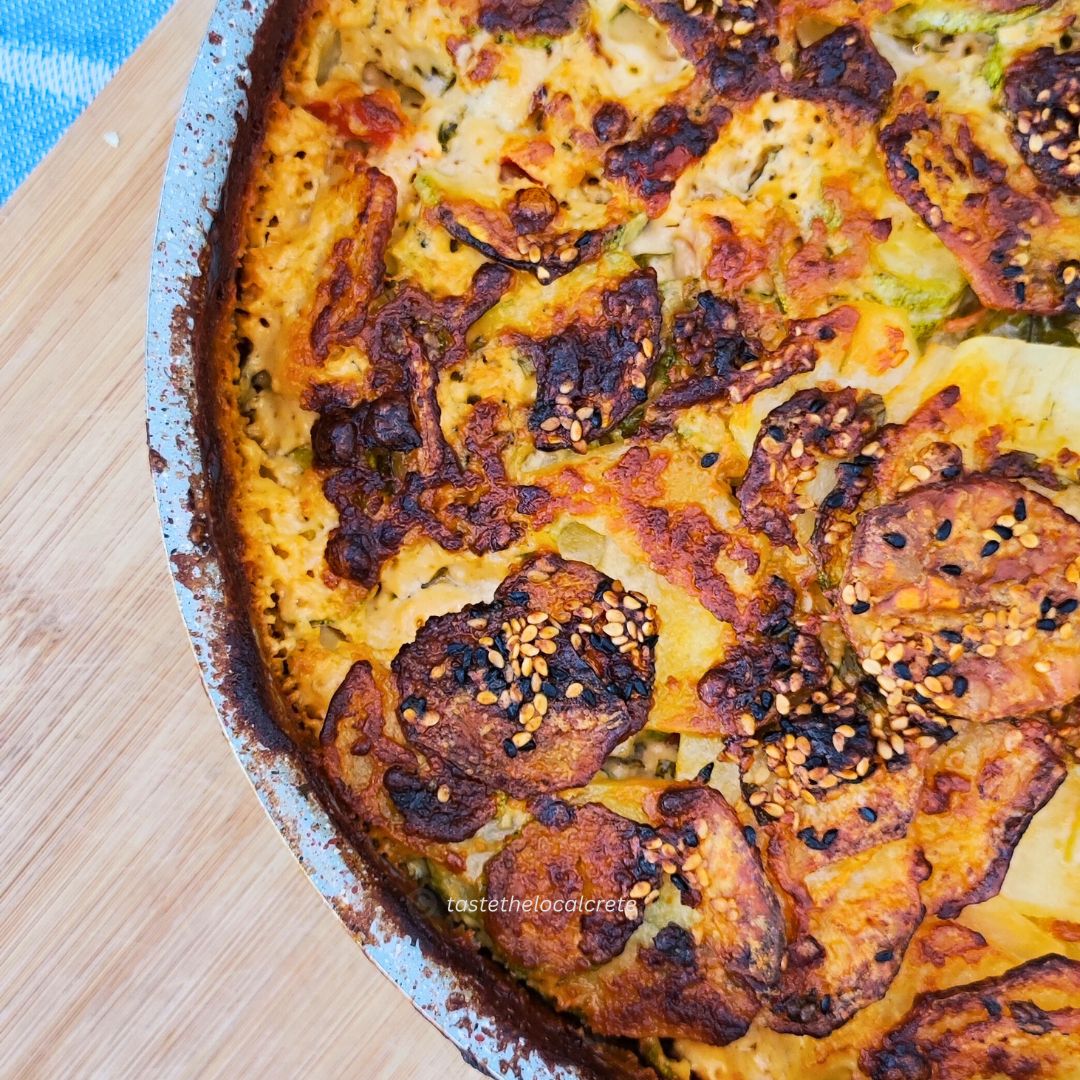
COOK THE CRETAN WAY AT HOME
The six Cretan foods in this post are a good starting point, but they’re just that: a starting point. The daily cuisine of Crete goes much deeper, and the best way to get into it is to start cooking.
The digital Cretan cookbook by Taste the Local Crete brings together 50+ authentic recipes from the real, everyday food culture of the island. Not restaurant dishes. Not tourist adaptations. The kind of food that shows up on a Cretan table on an ordinary Wednesday.
You can use it on your smartphone, tablet, or laptop, which makes it practical whether you’re cooking at home or planning what to order when you’re actually on the island.
Start with the free Cretan recipe guide. It’s a genuine snapshot of Cretan home cooking and a good introduction to what the full cookbook contains.
After all, the best way to understand what makes Cretan foods so distinct is to cook them yourself. Happy cooking!
FREE LOCAL'S GUIDE TO CRETE
Get my free 25-page Cretan guide with insider tips and answers to your most common questions. Written by someone who actually lives here.